The power of placemaking in KSA
How Saudi Arabia can turn development into destinations
Saudi Arabia is undergoing one of the most significant built-environment transformations in the world today. Under Vision 2030, vast new cities, districts, and neighbourhoods are being delivered at unprecedented speed and scale. Capital is flowing, regulation is evolving, and development pipelines are expanding rapidly.
But in this new landscape, success is no longer defined by delivery alone. The key question is not simply what can be built, but whether what is built will perform. This is where placemaking becomes critical.
In The Power of Placemaking in KSA, Greenspace publishes a whitepaper that sets out a clear framework for turning developments into legacy destinations, demonstrating placemaking as both a creative discipline and commercial strategy that accelerates leasing and strengthens demand, creating places people choose, return to, and value, now and for generations.
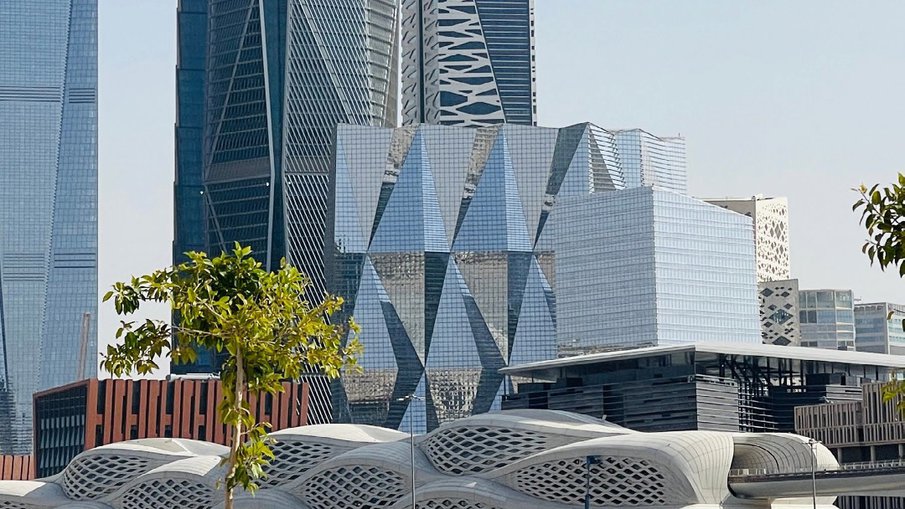
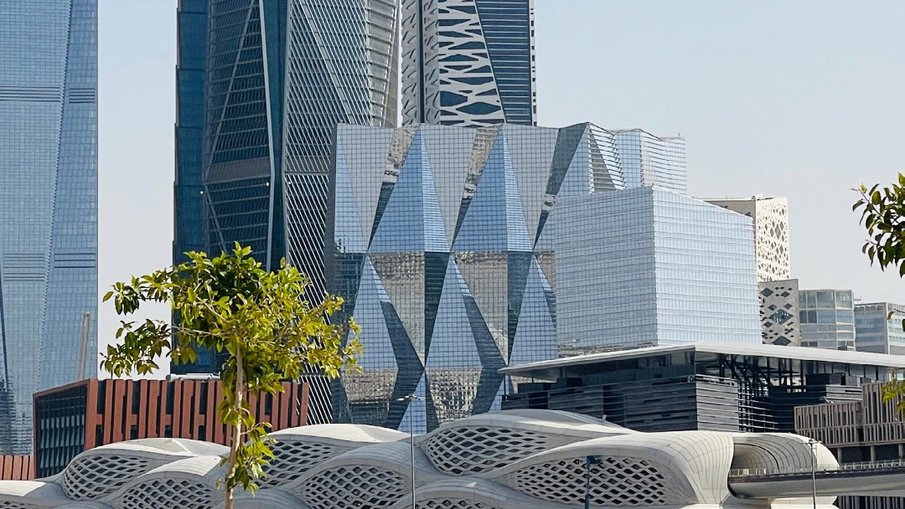
Placemaking as a strategic discipline
Placemaking is the discipline of shaping how a place is experienced, understood, and valued over time. It connects physical development to real human behaviour—how people live, move, gather, and spend time.
Rather than beginning with built form, placemaking begins with purpose. Who is the place for? What role does it play in daily life? What emotional and functional needs does it serve?
Placemaking aligns vision, experience, and community into a single framework. It shapes behaviour—how people arrive, how they interact, and what brings them back.
In doing so, it transforms space into place.
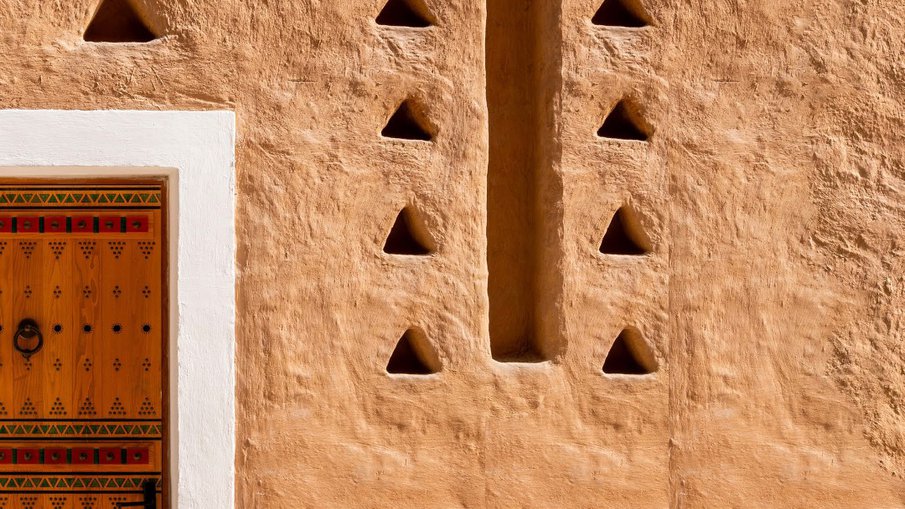
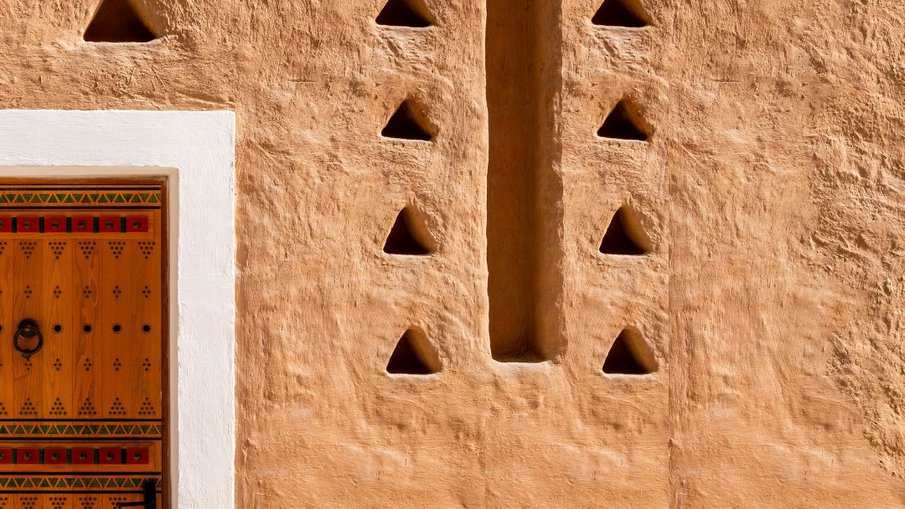
A new era for real estate in Saudi Arabia
Saudi Arabia’s real estate market is entering a fundamentally different phase. Regulatory reforms such as the White Land Tax are accelerating development, while infrastructure-first requirements ensure that public realm and amenities are delivered upfront.
At the same time, supply is increasing at scale.
For developers and investors, this shifts the basis of competition. Generic developments compete on price. Distinctive places compete on identity, relevance, and experience.
In this environment, placemaking moves from a differentiator to a core value driver.
Why placemaking matters to stakeholders
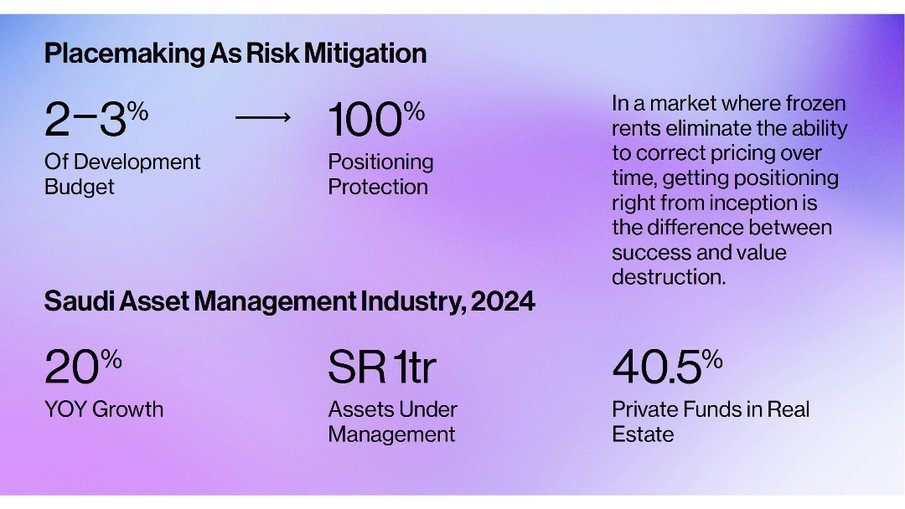
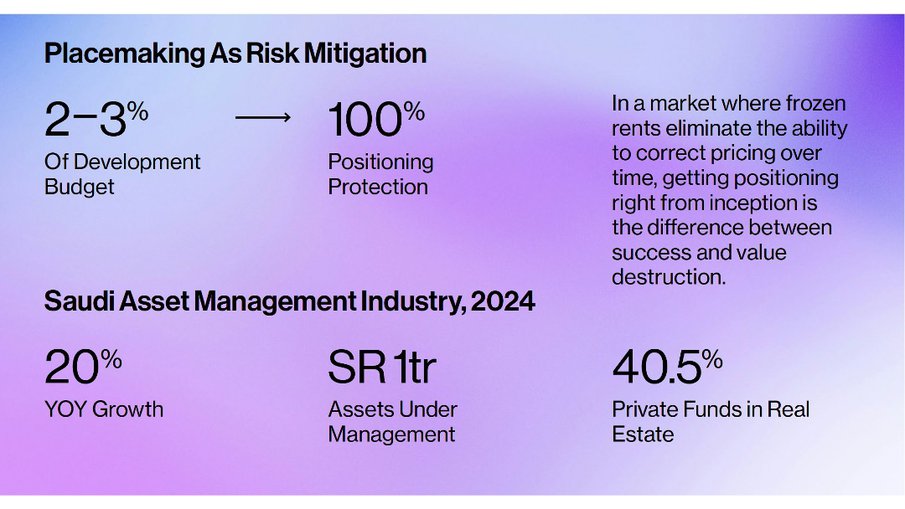
Placemaking has the greatest impact when applied early, creating measurable value across the entire development ecosystem.
For investors and capital allocators, it improves risk-adjusted returns by strengthening demand assumptions and supporting more stable income streams.
For developers and operators, it accelerates leasing and absorption by reducing friction at launch.
For landowners, placemaking increases site value by aligning uses with real patterns of behaviour.
For hospitality and tourism operators, it drives dwell time, repeat visitation, and spend.
For asset managers, it enhances long-term performance through retention, reduced turnover, and sustained relevance.
Placemaking and ROI
The value of placemaking is not abstract. It translates directly into financial performance.
When a development is grounded in a clear purpose, it reaches stable occupancy more quickly. Early-stage volatility is reduced, and income stabilises sooner.
Demand and operational performance becomes more consistent and less dependent on short-term incentives, improving revenue quality over time.
From an ownership perspective, these characteristics create more durable assets—easier to underwrite, simpler to value, and more attractive to long-term investors.
From space to place
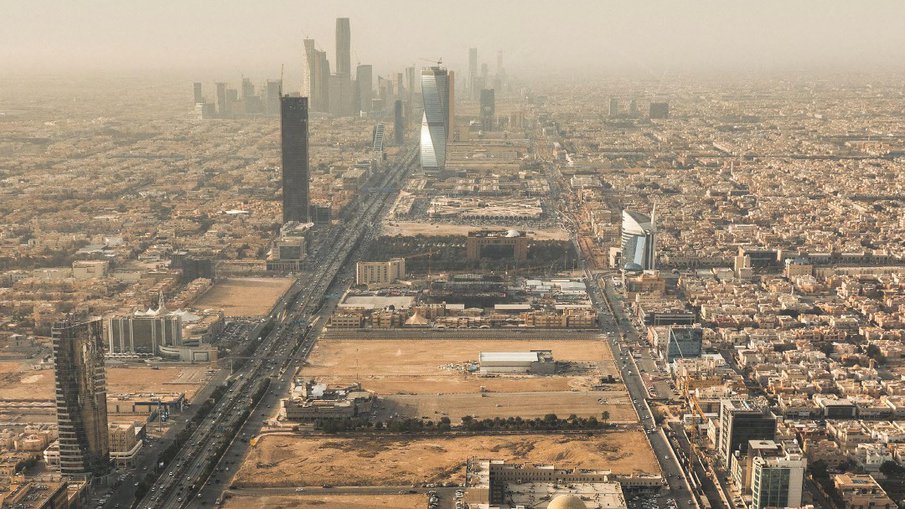
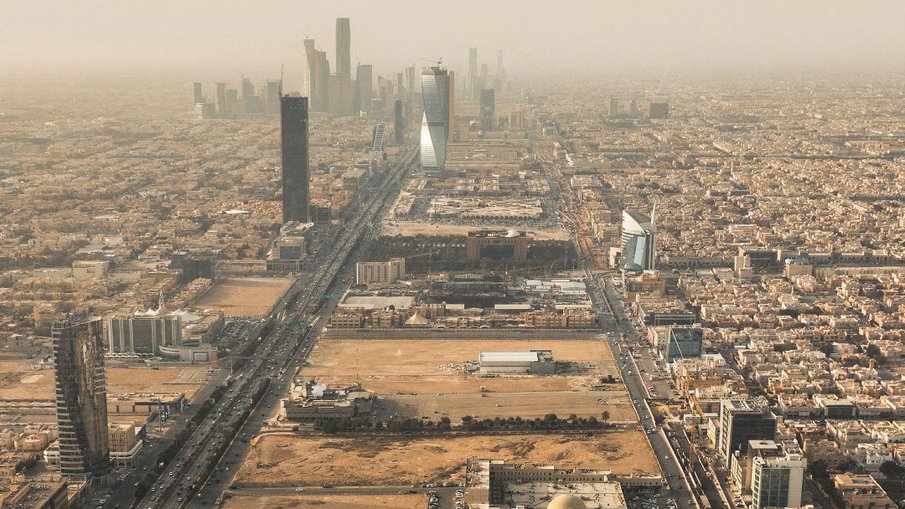
Traditional development begins with space, land, infrastructure, and what can be built.
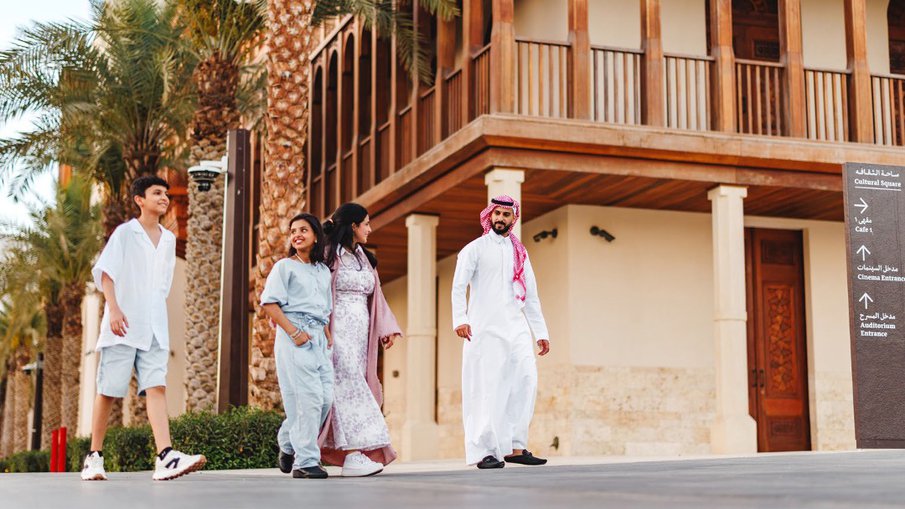
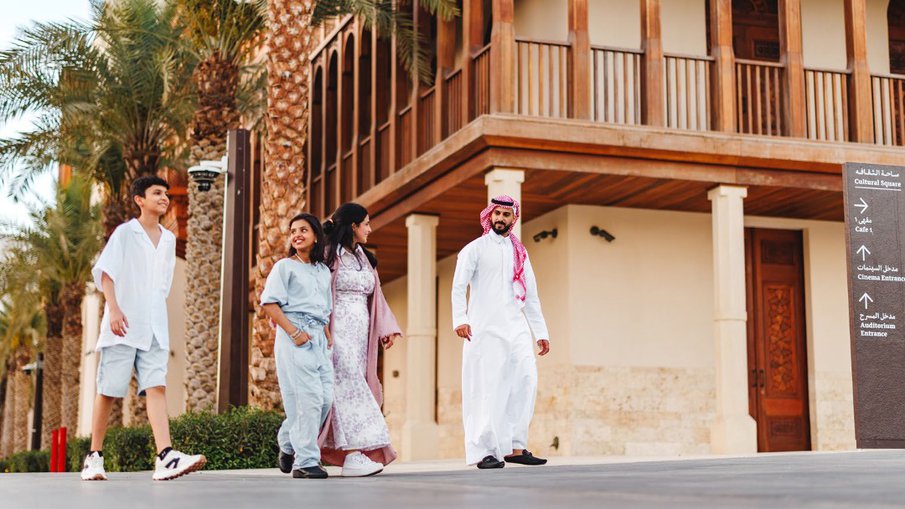
Placemaking begins with people. Place is created when space is shaped around a clear and compelling purpose that reflects how people actually live. It considers movement, behaviour, and patterns of use across time—morning to evening, weekday to weekend.
When these patterns are anticipated early, places function naturally, ensuring that they evolve while maintaining coherence and relevance.
Designing for energy, rhythm, and experience
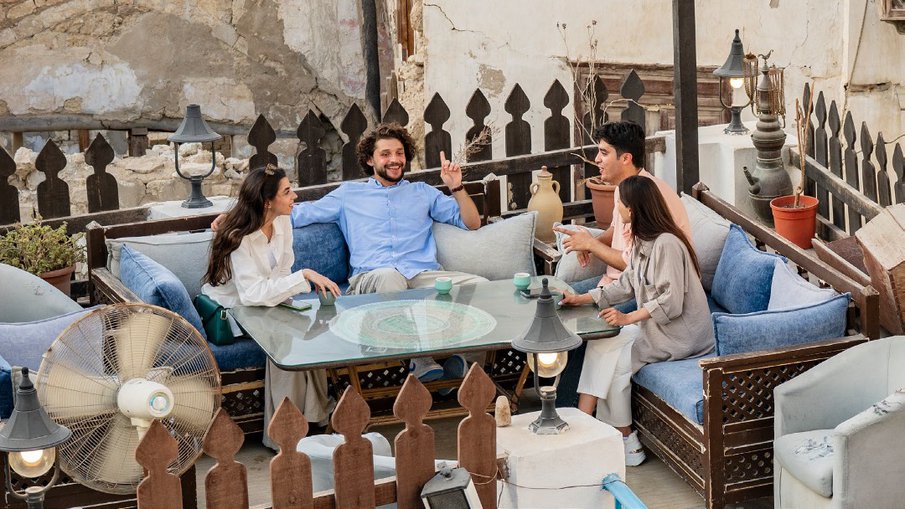
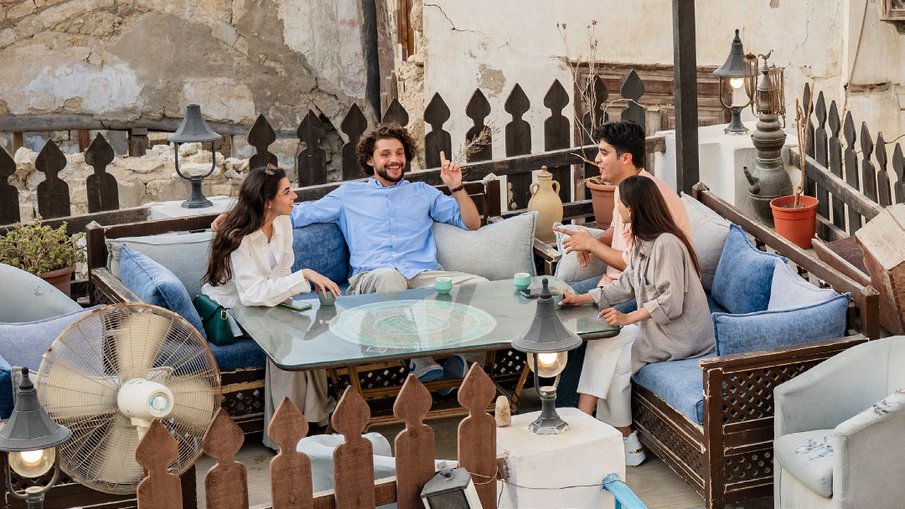
The success of a place is defined by its energy, its rhythm, and how it feels to be there. Placemaking shapes these qualities deliberately.
Movement and rhythmic patterns determine where people gather, where they pause, and where activity concentrates. Public spaces are designed to balance vibrancy and calm, creating environments that feel both dynamic and legible.
Connection sustains energy. Spaces that encourage overlap and interaction build familiarity, attachment, and community.
Experimentation, Culture, Community
Great places are not static, they evolve.
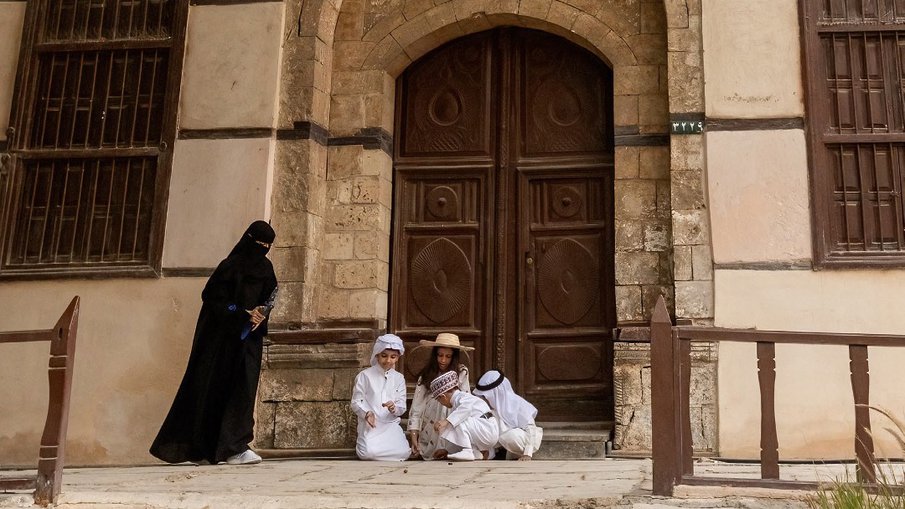
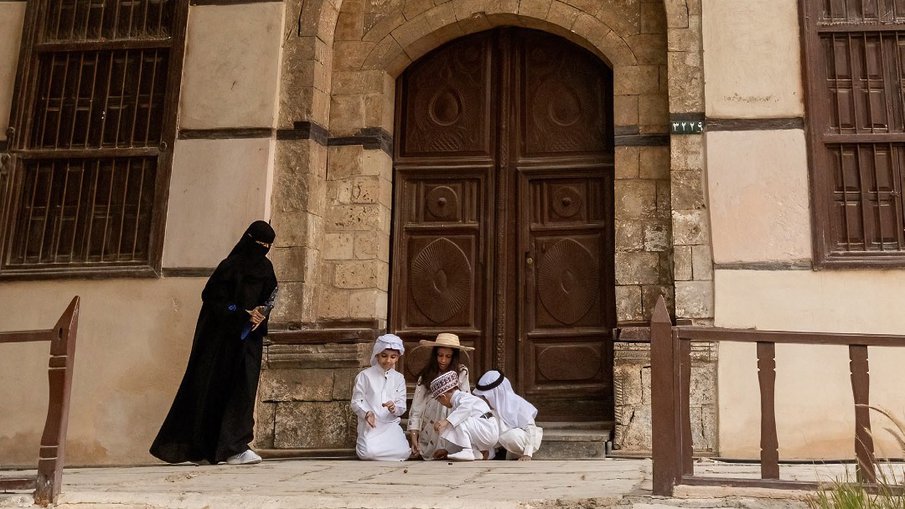
Placemaking embraces evolution by treating developments as living systems. Temporary activations and “meanwhile” uses introduce life early, revealing how people engage with a place. These insights inform long-term decisions.
Culture and community play a central role. Local habits, climate, history, and social patterns shape how places are used and understood. Placemaking builds on these foundations to create environments that feel authentic and credible, anchoring long-term value.
Creating Legacy
The most successful developments are those that endure.
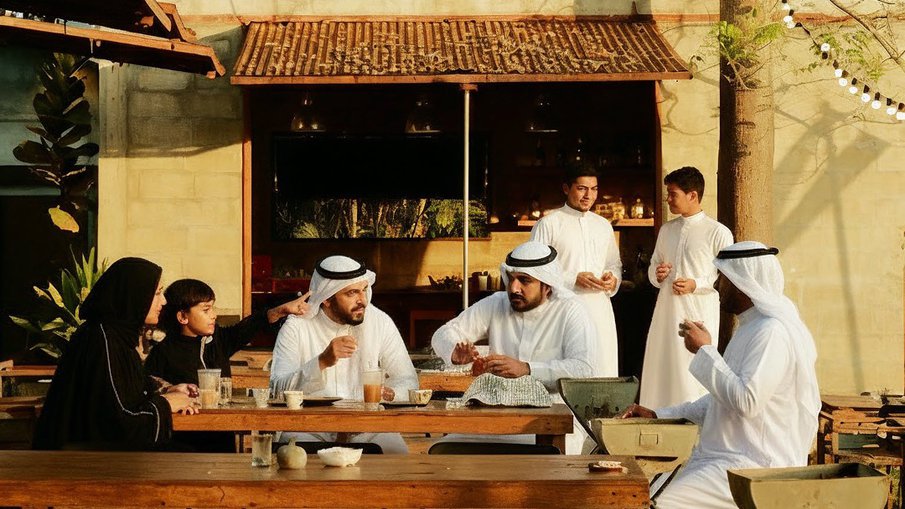
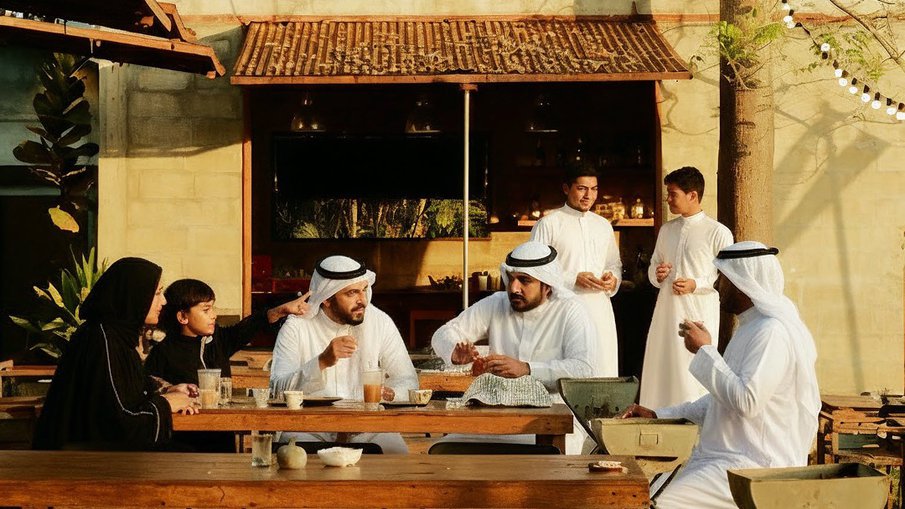
People do not form lasting connections with buildings alone—they connect with how places make them feel, what they enable, and how they fit into everyday life.
Legacy places perform more steadily over time. They maintain demand, attract repeat use, and require fewer interventions, remaining relevant across generations.
Working with Greenspace
Working at the intersection of strategy, culture, and design, Greenspace helps clients define the purpose of a place, the audience it serves, and the experience it delivers.
Greenspace's approach spans the full development lifecycle—from early vision and feasibility through to activation, operation, and long-term management.
The result is not just development, but creating legacy destinations: places with clarity, identity, and positive lasting value.
